
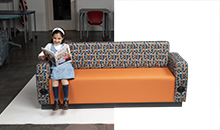
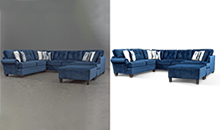

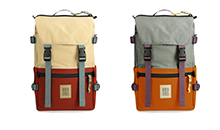
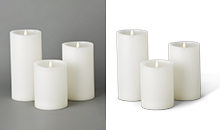



Is Your “Instant” Background Removal Affecting Your Sales?
We are all looking for ways to move faster. When AI first promised to clear backgrounds in a single click, it felt like a dream for e-commerce. However, for those building a serious brand, a subtle truth has emerged: “Instant” results and “premium” quality rarely live in the same house.
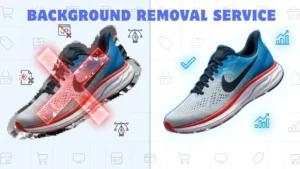
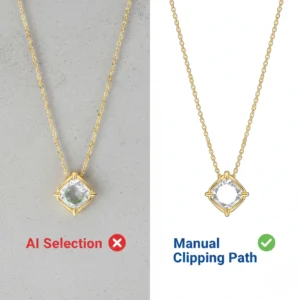
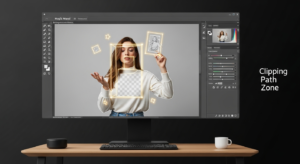
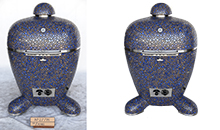
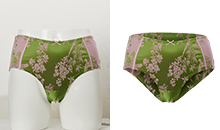
By 2026, online shoppers have become incredibly observant. When they zoom in on your product, they are looking for a reason to trust you. If they encounter jagged, “vibrating” edges or sloppy cutouts, that trust can waver. This is why high-growth brands are moving away from full automation and returning to the surgical, manual precision of a Hand-Drawn Clipping Path.
Technical Mastery: Why Every Object Needs a Human Eye
A common misconception is that all clipping is the same. At our studio, we recognize that every object has its own unique geometry. A simple box and a diamond ring cannot be treated with the same logic.
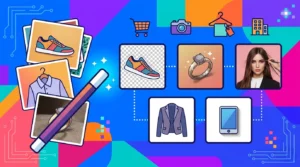
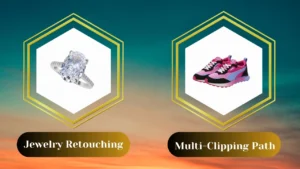
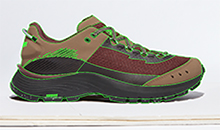
One major area where AI often falls short is Multi-Path Creation. Most automated tools treat an image as one flat, static object. If you have a sneaker and you want to change the color of the laces without affecting the rest of the shoe, basic AI is often insufficient. Our human approach changes the workflow:
- The CPZ Approach: We draw separate, independent paths for individual components like laces, eyelets, and soles.
- The Benefit: This gives your team total post-production freedom. You can perform professional color correction or “color swapping” in seconds, turning a single photoshoot into an entire seasonal catalog.
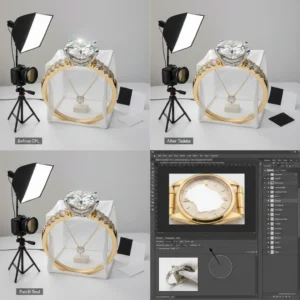
Case Study: The “Luxe-Watch” Transformation
The Challenge: A boutique watch brand was using AI-automated background removal. Despite high traffic, their conversion rate was stalled at 1.4%. Heatmaps showed customers zoomed in on the watch faces but rarely hit “Add to Cart.”
The Solution: CPZ re-processed their catalog using a meticulous Hand-Drawn Clipping Path strategy, including multi-path color grading for the metallic bands.
The Result: Within 60 days, the brand saw a 24% increase in conversions. The “crisp” edges on high-resolution displays gave customers the confidence that the product was as high-quality as its price tag suggested.
Mastering Physics: Transparency and Shadows
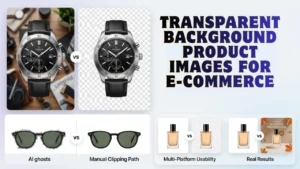
The ultimate test for any editor is glassware. Achieving “True” Transparency in a perfume bottle is something AI almost always fails at; it often deletes natural reflections, making the product look flat.
- Glassware Excellence: We use a blend of manual paths and Alpha Channel Masking to retain the gloss and “see-through” nature of the glass.
- Shadow Preservation: Automated tools usually remove the shadow along with the background, leaving the product “floating.” We manually isolate or recreate Natural, Drop, or Reflection Shadows to ground the product.
- Path Choking: We trace the Hand-Drawn Clipping Path a tiny fraction of a pixel inside the edge. This “chokes” any color bleed from the original background.
- Anchor Point Optimization: AI tools generate thousands of messy points that make files heavy. Our editors use only the points needed to create a perfect curve, which actually helps your website load faster.
Strategic Breakdown: Choosing the Right Level of Service
| Category | Typical Products | The Manual Advantage |
| Basic | Books, Simple Boxes | 100% vector-sharp edges that never blur on high-res screens. |
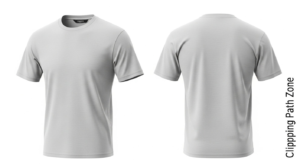
| Medium | Shoes, Apparel, Handbags | Cleaning internal gaps (like handles) that AI misses. |
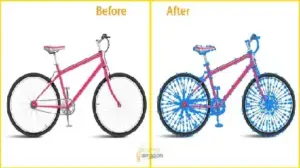
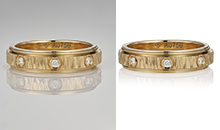
| Complex | Jewelry, Bicycles, Mesh | Navigating every chain link or prong with zero “fuzz.” |
| Super Complex | Industrial Machinery | Pixel-perfect work designed for high-end catalogs. |
The Strategic Value: Why Precision is a Sales Strategy
Smart sellers don’t see image editing as a cost; they see it as a revenue driver. Precision directly impacts your bottom line:
- Conversion Lift: High-quality imagery is a major factor in buyer confidence. According to Salsify, 70% of shoppers require at least 3-4 images to make a purchase decision. A Hand-Drawn Clipping Path ensures those images look flawless.
- Marketplace Compliance: Platforms like Amazon now use automated bots to hide low-quality listings. Manual work is your insurance policy.
- Consistency: AI results are unpredictable. Manual work ensures every item in your catalog looks like it belongs to the same high-end brand.
- Scalability: Because we use Bézier curves, our paths are vector-based. You can scale your product to a massive billboard, and the edges will stay razor-sharp.
Data Insight: Industry studies show that professional photo editing can increase “Add to Cart” rates by up to 35% by reducing visual friction and “perceived risk” during the shopping experience.
FAQ
- Does Clipping Path Zone use any automation?
We use technology to organize our workflow, but every “money image” is hand-refined by a senior editor. We don’t let a machine make the final call on your brand’s quality.
- Why is a Hand-Drawn Clipping Path better than a “Magic Wand” selection?
The Magic Wand selects pixels based on color, which leads to jagged edges. A hand-drawn path uses mathematical curves that stay smooth no matter how much you zoom in.
- Can you handle bulk orders?
Absolutely. We specialize in high-volume processing. Our team can deliver thousands of hand-crafted images within 24 hours.
Conclusion: Quality is the Best Marketing
In the battle of Hand-Drawn Clipping Path vs. AI, speed is often a trap. While AI is fast, it can leave behind a trail of sloppy edges and lost trust. In 2026, quality is the only way to stand out. At Clipping Path Zone, we don’t just remove backgrounds—we bring your products to life with surgical precision.