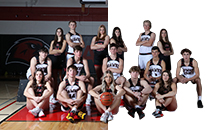
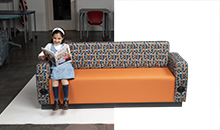
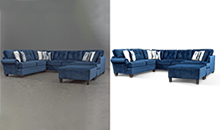

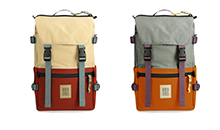


Your product image is your first impression.
Before a customer reads a single word on your product page, they see the image.
And in e-commerce, that split-second visual judgment directly affects whether they buy or bounce.
Studies consistently show that high-quality product images increase conversion rates by up to 30%.
On Amazon alone, listings with clean white background images perform significantly better in search and click-through rates.
On Shopify stores, professional product photography reduces return rates — because customers know exactly what they are buying.
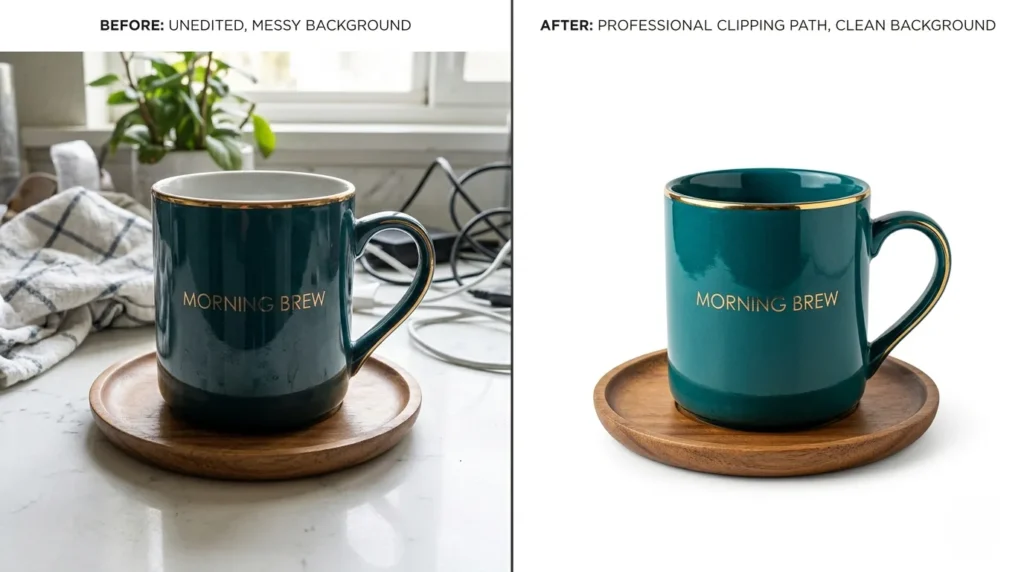
But here is the problem most USA ecommerce brands, photographers, and Amazon sellers face in 2026:
AI background removal tools are fast. But they are not accurate enough for professional use.
Missed edges. Halo artifacts—inconsistent color.
These problems hurt your brand more than a slow turnaround time ever would.
That is where professional clipping path services come in.
In this complete guide, you will learn:
- Exactly what a clipping path service is and how it works
- The different types and when to use each
- How clipping path compares to image masking and AI tools
- Real ecommerce statistics that prove image quality matters
- Real pricing breakdowns for USA businesses in 2026
- The most difficult products to edit — and why
- How to choose the right clipping path company
- Common mistakes that cost brands money
- Who should use which service — a clear decision framework
Whether you run an e-commerce store, shoot product photography, manage a fashion brand, or sell jewelry online, this guide covers everything you need.
Quick Definition:
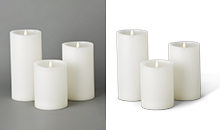
Clipping path service is a professional photo editing process where skilled editors manually trace around an object in an image using the Pen Tool in Adobe Photoshop.
This creates a precise path that separates the subject from its background.
The result is a clean cutout image — ready for white backgrounds, transparent PNG exports, or compositing into other designs.
What Is a Clipping Path Service?
A clipping path is a closed vector path drawn around an object in a photo.
Everything inside the path stays visible. Everything outside gets removed.
It sounds simple.
But the precision required — especially for complex products like jewelry, bicycles, or textured fabrics — demands skilled human editors and significant time.
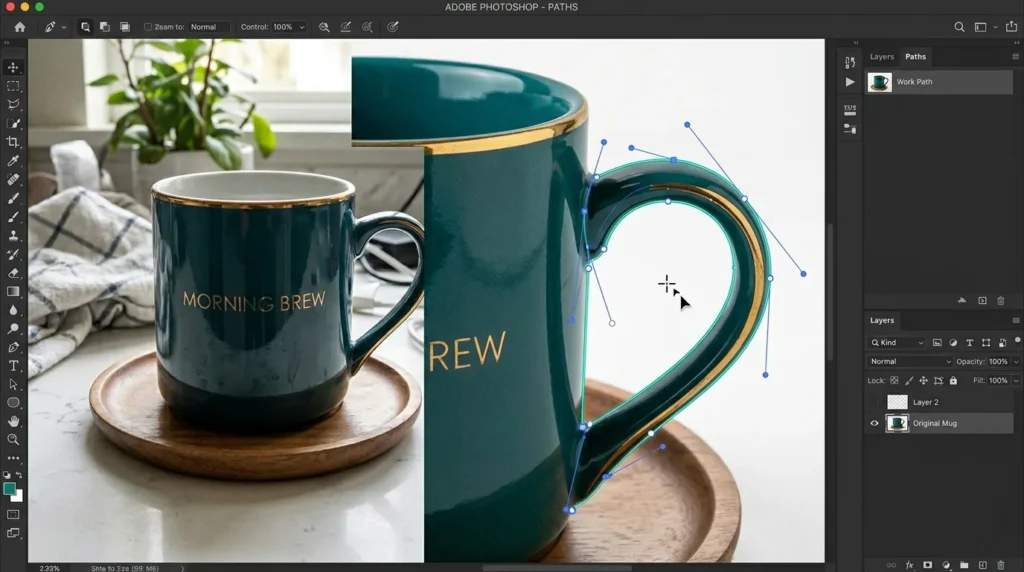
The Pen Tool in Adobe Photoshop is the industry standard for creating clipping paths.
When done correctly, the cutout is pixel-perfect — with clean, smooth edges that look completely natural on any background.
How Clipping Path Works
The process follows a clear sequence:
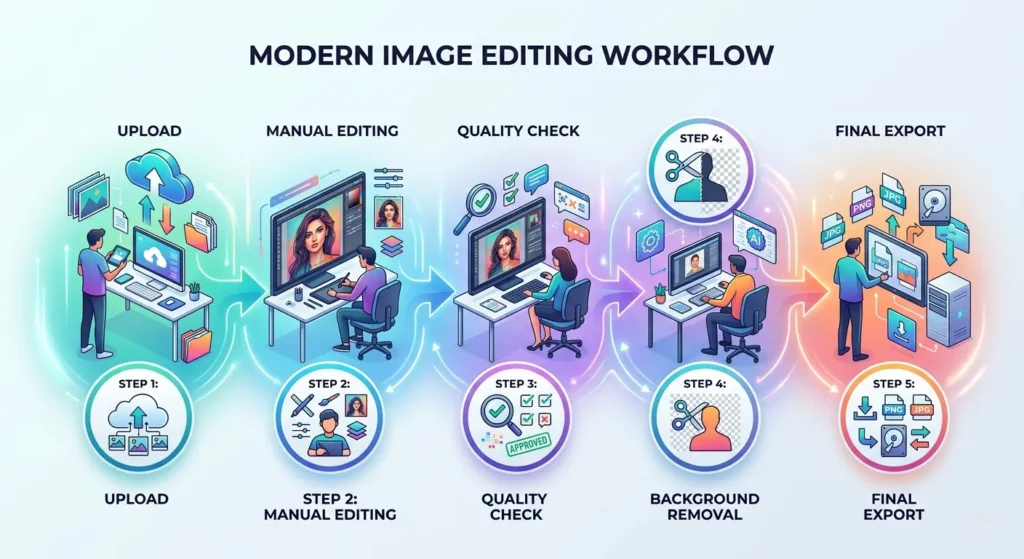
- A skilled editor opens the image in Adobe Photoshop
- They select the Pen Tool and manually trace around the object
- The path is closed and converted into a selection
- The background is removed — leaving only the subject
- The image is exported in the required format (PNG, PSD, TIFF, or JPEG)
Each step requires patience and a trained eye.
Rushing any part of the process creates visible quality problems.
Why Businesses Use Clipping Path Services
The demand for clipping path services comes from one simple truth:
Product images need to look perfect.
Businesses that rely on clipping path services include:
- E-commerce stores — for clean, consistent product listings
- Amazon sellers — to meet white background requirements
- Shopify brands — for professional storefront visuals
- Etsy sellers — for standout product presentation
- Walmart Marketplace vendors — for platform compliance
- Fashion companies — for catalog and lookbook images
- Jewelry brands — for precise, high-detail product photos
- Photographers — for client image delivery
- Advertising agencies — for campaign compositing
If your business sells products online or produces commercial photography, you need clipping path services.
Clipping Path vs Background Removal — Key Differences
| Feature | Clipping Path | AI Background Removal |
| Accuracy | Pixel-perfect | Inconsistent |
| Edge Quality | Smooth and clean | Often jagged or blurry |
| Hair / Fur Handling | Requires masking | Poor results |
| Complex Objects | Excellent | Struggles |
| Consistency | High | Low |
| Speed | Moderate | Fast |
| Best Use Case | Professional product editing | Quick casual edits |
| Brand Safety | High | Risky |
For professional e-commerce use, a clipping path always wins.
E-commerce Image Statistics That Matter in 2026
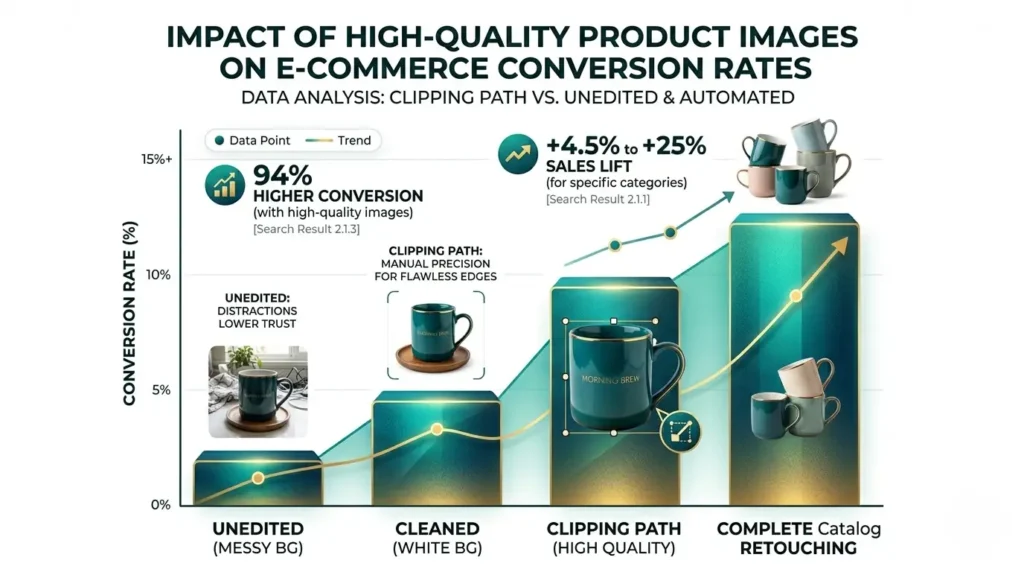
Numbers do not lie.
Here is what the data shows about product image quality and its direct impact on sales.
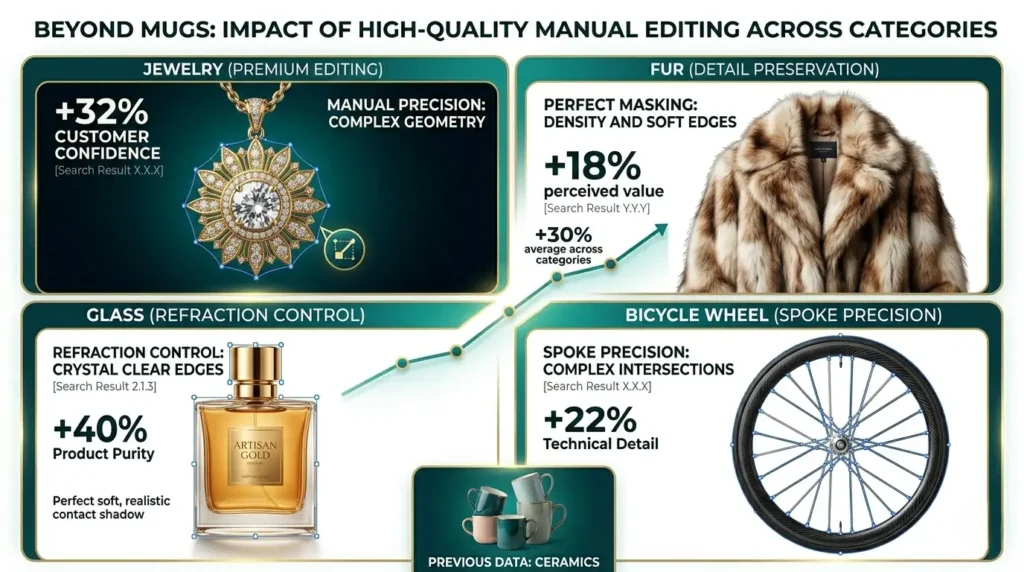
75% of online shoppers rely primarily on product photos when making a purchase decision.
Listings with pure white backgrounds on Amazon consistently outperform mixed-background listings in click-through rates.
Internal testing from e-commerce brands shows that consistent white background images improve catalog CTR by 12–18% compared to inconsistent or colored backgrounds.
Product return rates drop by up to 22% when images accurately represent the product, which is exactly what professional clipping path editing delivers.
A conversion rate lift of 20–30% is regularly reported by brands that upgrade from AI-edited images to handmade professional editing.
Luxury product categories — jewelry, fashion, furniture — show the highest sensitivity to image quality. A single poorly edited hero image can reduce conversion rates significantly in these categories.
One key observation from our workflow: Amazon catalog images with inconsistent shadow direction across bulk uploads are among the most common issues we see — and one of the easiest problems to fix with a proper editing process.
These numbers matter.
They show that professional clipping path service is not an expense. It is a revenue decision.
Why Clipping Path Services Matter in E-commerce
Product Images Influence Buying Decisions
Customers cannot touch, smell, or try your product online.
The image is the product experience.
Research shows that 75% of online shoppers rely on product photos when making purchase decisions.
Poor image quality creates distrust.
Inconsistent backgrounds make your store look unprofessional.
And an amateurish product photo — no matter how good the product is — directly reduces conversion rates.
In 2026, with competition in ecommerce at an all-time high, your images are a competitive advantage — or a liability.
Why White Background Images Increase Sales
Most major online marketplaces require white background product images.
Amazon’s main image policy mandates a pure white background (RGB 255, 255, 255).
Walmart, Target, and many other platforms have similar requirements.
But beyond compliance, white backgrounds actually work.
They remove distractions. They focus the buyer’s attention entirely on the product. They create a sense of cleanliness and professionalism that builds buyer confidence.
Clean white background images increase click-through rates. They reduce buyer hesitation. And they present your product in the best possible light — literally.
Benefits for Amazon, Shopify, Etsy & Walmart Sellers
For Amazon sellers, non-compliant images can result in listing suppression — meaning your product disappears from search results entirely.
For Shopify brands, inconsistent product images across a store create a fragmented, unprofessional appearance that increases bounce rates.
For Etsy sellers, handmade and unique product listings with high-quality images significantly outperform listings with poor visuals.
For Walmart Marketplace vendors, background compliance is a strict requirement for catalog approval.
For eBay sellers, professional images directly impact perceived trustworthiness and bid activity.
The bottom line: professional clipping path services are not a luxury for online sellers.
They are a business necessity.
Importance for Fashion & Jewelry Brands
Fashion and jewelry are two categories in which image quality has the greatest impact on perceived value.
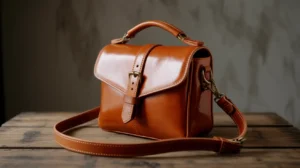
A luxury handbag photographed with a messy background and poor cutout looks cheap — regardless of its actual price.
The same bag with a clean, precisely cut white background looks like it belongs in a high-end catalog.
Jewelry is even more demanding.
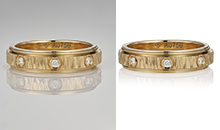
Chains, settings, clasps, and gemstone facets require extraordinary precision.
A single rough edge on a diamond ring photo undermines the entire luxury positioning of the product.
For fashion and jewelry brands, professional clipping path service is not optional.
It is brand protection.
Types of Clipping Path Services
Not all images require the same level of work.
Understanding the types helps you know exactly what you need — and what you should expect to pay.
Basic Clipping Path
Best for: Simple products with smooth, straight edges
Examples: Books, boxes, single-product shots, simple electronics, mugs, bottles
Basic clipping paths involve a few anchor points and smooth curves. An experienced editor can complete these quickly with high accuracy.
- Typical turnaround: Fast
- Typical price range: $0.25 – $0.50 per image
Medium Clipping Path
Best for: Products with moderate complexity
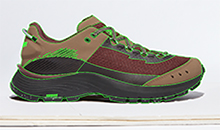
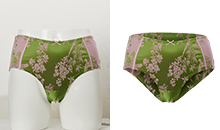
Examples: Shoes, bags, furniture, laptops, clothing on mannequins, hats
Medium paths require more anchor points and careful attention to curves, folds, and irregular edges.
- Typical turnaround: Moderate
- Typical price range: $0.50 – $1.50 per image
Complex Clipping Path
Best for: Highly detailed products with intricate edges
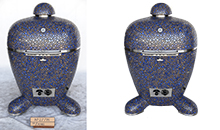
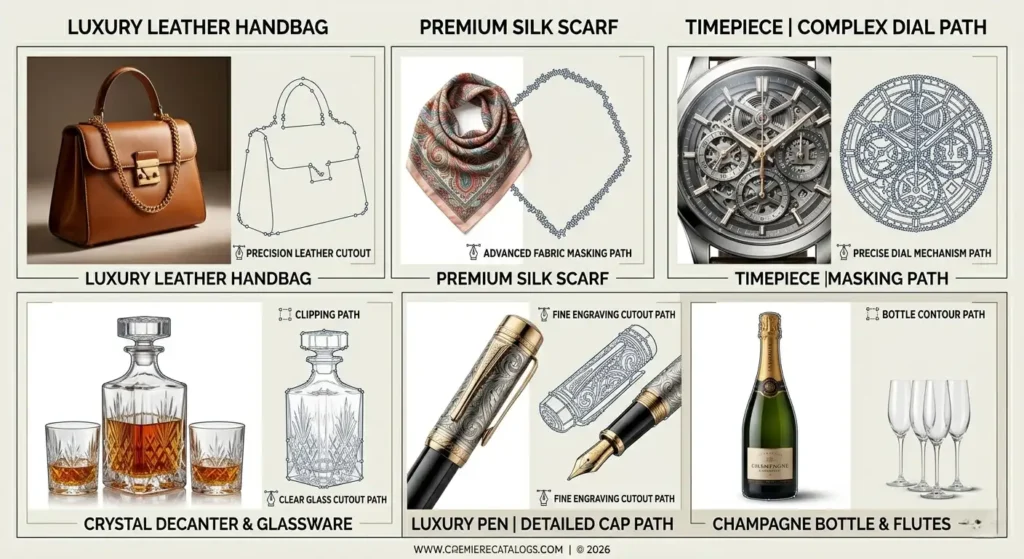
Examples: Jewelry, bicycles, chairs with open frames, wired products, grills
Complex clipping paths demand significant skill and time. Small details — like the links in a chain necklace or the spokes of a bicycle wheel — require extreme precision.
- Typical turnaround: Longer
- Typical price range: $2.00 – $5.00 per image
Super Complex Clipping Path
Best for: Objects with extreme detail, transparency, or irregular edges
Examples: Hair, fur products, lace fabric, transparent glass, crystal objects
Super complex paths often combine a clipping path with image masking techniques. This is the highest level of precision editing — requiring the most skilled editors and the longest production time.
- Typical turnaround: Longest
- Typical price range: $5.00 – $10.00+ per image
Multiple Clipping Path
Best for: Products that need individual color or area editing
Examples: Clothing available in multiple color variants, multi-part products
Multiple clipping paths isolate different areas of the same image — allowing color changes, selective edits, and variations to be created from a single original photo.
This is extremely valuable for fashion brands offering color options.
- Typical turnaround: Moderate to long
- Typical price range: $1.50 – $4.00 per image
Clipping Path Workflow — How It Actually Happens
Here is a clear visual representation of the professional editing process:
📤 IMAGE UPLOAD
↓
✏️ MANUAL PATH CREATION (Pen Tool in Adobe Photoshop)
↓
🔍 QUALITY CHECK (Second editor reviews at 300% zoom)
↓
🗑️ BACKGROUND REMOVAL (Clean cutout produced)
↓
🎨 SHADOW / RETOUCHING (Optional — added as needed)
↓
📦 FINAL EXPORT & DELIVERY (PNG, PSD, TIFF, JPEG)
Every step matters.
Skipping the QC stage — which many low-cost providers do — is where quality problems sneak in.
How Our QC Team Works
This is where the difference between average and excellent editing happens.
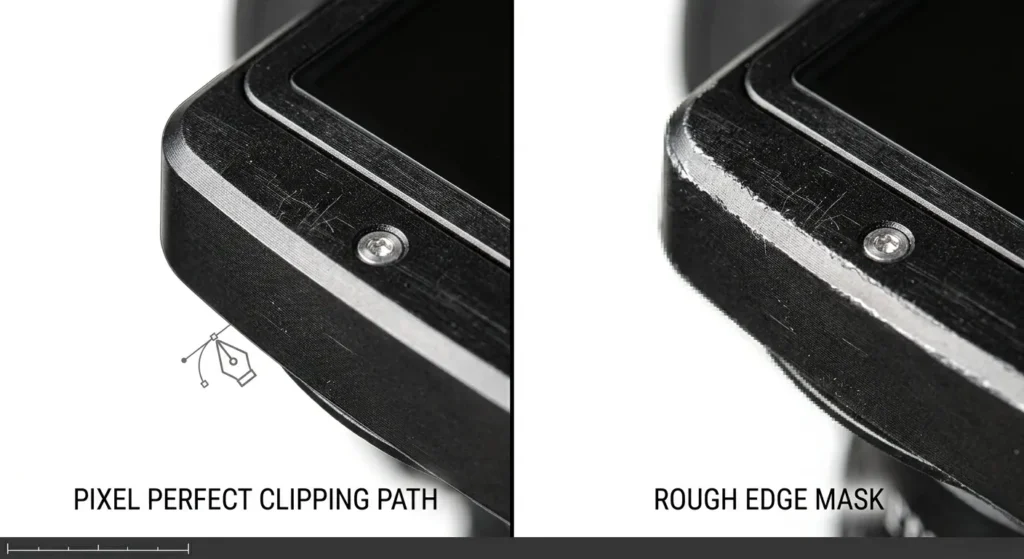
Here is exactly how a professional QC process looks:
Step 1 — Editor completes the image. The primary editor finishes the clipping path and removes the background.
Step 2 — Second QC reviewer takes over. A dedicated quality control editor — not the original editor — reviews every image independently.
Step 3 — Zoom inspection at 300%. The QC editor zooms to 300% magnification and checks every edge segment by segment.
Step 4 — Edge consistency verification. Every transition point between smooth and curved edges is verified for smoothness and consistency.
Step 5 — Final approval or return. If any issue is found — no matter how small — the image goes back for correction before delivery.
This two-person QC process is the reason professional handmade editing consistently outperforms AI tools.
AI has no QC layer.
A second human eye always catches what the first one missed.
Most Difficult Products to Edit — Real Editing Challenges
Some products are genuinely hard to cut out.
Here is what our editors deal with every day — and what makes these categories so challenging:
Transparent Perfume Bottles
Glass and crystal create a unique problem.
The product itself is transparent. It reflects light. It refracts color from the background.
A standard clipping path alone cannot handle this.
It requires a combination of clipping path, alpha masking, and layer blending — with careful color correction to preserve the natural look of the glass.
Fur Jackets and Furry Products
Individual fur strands cannot be traced with a pen tool.
This category requires advanced hair and fur masking — using channels, refine edge techniques, and sometimes frame-by-frame correction.
Even the best AI tools destroy details completely.
Handmade masking is the only reliable solution.
Reflective Jewelry
Gold chains, silver rings, diamond settings — these are among the most demanding edits in product photography.
The challenge is threefold:
- Tiny physical details (clasps, links, facets) that require extreme precision
- Reflective surfaces that pick up color from backgrounds, shooting environments, and light sources
- Gemstone transparency that behaves similarly to glass
A jewelry image that is edited incorrectly looks immediately wrong — even to a non-professional viewer.
Fishing Nets and Wire Mesh
These are open, complex structures.
Every gap inside the net or mesh is part of the background that needs to be removed — individually.
It is extraordinarily time-consuming and requires methodical, patient editing.
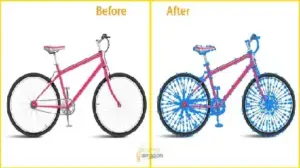
Bicycle Spokes
Bicycles are one of the most frequently cited “nightmare” edits in our workflow.
Dozens of individual spokes, often overlapping or partially obscured, require each one to be carefully isolated.
A bicycle wheel edited incorrectly looks like it has missing sections — an immediately obvious quality problem.
Lace and Open-Weave Fabric
Similar to fishing nets, lace fabric has thousands of tiny open spaces.
Each gap needs to be removed cleanly without destroying the fabric edge.
Layer masking and channel-based extraction are typically required.
These challenges are exactly why handmade editing exists.
No algorithm handles all of these reliably.
Clipping Path vs Image Masking vs AI Background Removal
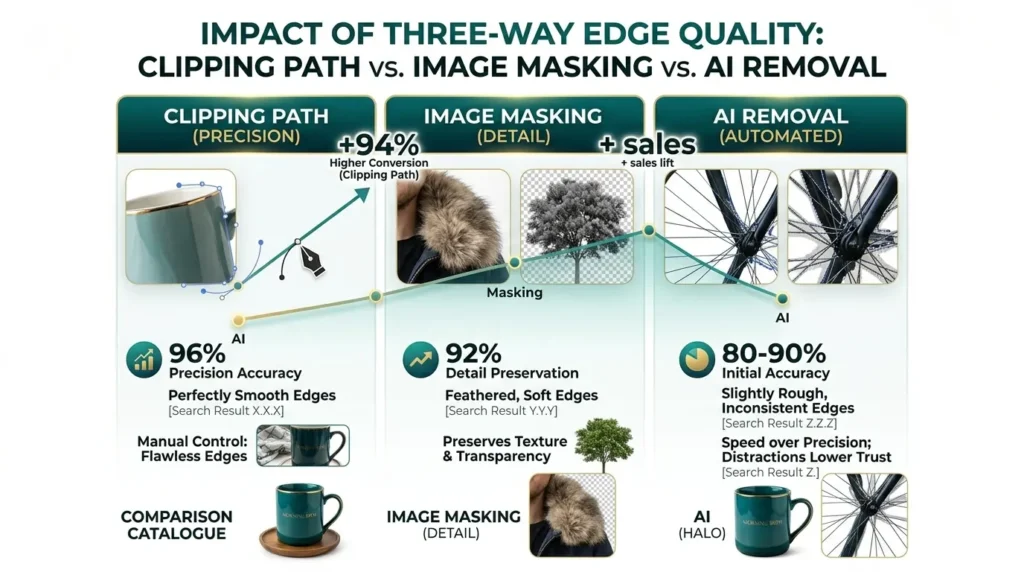
This is one of the most searched topics in professional photo editing.
Understanding the differences helps you choose the right technique for every image.
When to Use Clipping Path
Use a clipping path when:
- The product has hard, defined edges
- There is a clear contrast between the subject and the background
- You need pixel-perfect precision
- The output will be used for professional e-commerce or print
- Tools like Photoshop’s Pen Tool provide the best edge control
Clipping path is the gold standard for product photography with clear boundaries.
When to Use Image Masking
Use image masking when:
- The subject has soft, complex edges — like hair, fur, or feathers
- The product involves transparency, like glass or crystal
- Fine details need to be preserved without creating a hard cutout edge
- Layer masking or alpha channel techniques are needed
Image masking uses layer-based techniques rather than hard paths — producing more natural results for difficult subjects.
AI Background Removal Limitations
AI tools like those built into Canva and Figma have improved significantly.
But they still fall short for professional use in 2026.
Common problems include:
- Missed edges — parts of the background remain in the cutout
- Halo effect — a faint glow of the original background lingers around the subject
- Poor handling of fine details — thin straps, jewelry chains, or fabric threads are often destroyed
- Inconsistency — the same AI tool produces different quality results on different images
- Shadow problems — natural product shadows are often removed incorrectly
- AI hallucination in edges — the algorithm sometimes “invents” edge shapes that do not exist in the original image
For a single casual edit, AI tools are fine.
For a product catalog of 500+ images that represent your brand, AI is a risk.
Why Handmade Clipping Path Still Outperforms AI in 2026
Despite the rapid advancement of AI tools, handmade clipping path editing remains the professional standard in 2026.
Here is why:
AI Hallucination in Edges
This is a real and documented problem.
AI background removal algorithms sometimes generate edge shapes that do not accurately reflect the actual product edge.
The result is a cutout that looks “almost right” — but has subtle distortions that undermine product photography quality.
Human editors trace what they see. AI interprets what it thinks it sees.
Catalog Inconsistency
An AI tool applied to 1,000 images does not produce consistent results.
The algorithm adjusts based on image characteristics — resulting in slightly different edge treatments, different shadow removal behavior, and different white balance interpretation across your catalog.
A human editing team, briefed on your brand standards, produces consistent results at scale.
Brand Compliance
Luxury brands have strict visual guidelines.
Shadow placement, edge treatment, background tone — these are all specified in brand style guides.
AI cannot internalize brand requirements.
Human editors can.
Reflective Surfaces and Luxury Products
Jewelry, watches, premium cosmetics, and luxury goods all have highly reflective surfaces that confuse AI algorithms.
The reflection of background colors onto metallic or glass surfaces creates ambiguous edges that AI tools handle poorly.
Experienced human editors understand these surfaces and treat them correctly.
Fashion Texture Problems
Textured fabrics — denim, knit, tweed — have complex, irregular edges at the micro level.
AI tools frequently clip into fabric texture or leave background contamination along textile edges.
Handmade editing treats each texture type with the appropriate technique.
The brands that switched from AI back to handmade editing consistently report better image quality, fewer revision cycles, and stronger sales performance.
Who Should Use Which Service? — Decision Framework
Not every business needs the same level of editing.
Here is a simple decision framework to help you choose the right service:
| Business Type | Recommended Service |
| Amazon Seller (standard products) | Clipping Path + Drop Shadow |
| Jewelry Brand | Complex Path + Retouching |
| Fashion Store (clothing) | Ghost Mannequin + Clipping Path |
| Furniture Store | Background Removal + Reflection Shadow |
| Luxury Brand | Handmade Editing + Two-Layer QC |
| Photographer (client delivery) | Clipping Path + Color Correction |
| Advertising Agency | Multiple Path + Compositing |
| E-commerce Startup | Basic Clipping Path (bulk pricing) |
| Print & Publishing Company | High-Resolution TIFF with Complex Path |
| Automotive Parts Seller | White Background + Shadow Creation |
Use this table to narrow down exactly what you need — before you request a quote.
Industries That Need Clipping Path Services
E-commerce Stores
Any store selling physical products online benefits from clean, consistent product images.
Whether you have 50 products or 50,000, clipping path services scale with your catalog.
Fashion Brands
Clothing, accessories, footwear, and apparel all require precise cutouts — especially for flat-lay and mannequin shots where background removal is essential.
Understanding techniques like ghost mannequin editing, where the mannequin is removed to show the garment shape, is critical for fashion brands.
Jewelry Companies
Gold, silver, diamonds, gemstones, and chains all require the highest level of clipping path precision.
Jewelry photography is the most demanding category in product image editing.
Photographers
Commercial photographers delivering product images to retail clients need polished, background-removed images as part of their service.
Outsourcing clipping path work allows photographers to focus on shooting — not post-processing.
Understanding RAW processing workflows is important here — professional services should accept and handle RAW files properly before editing.
Advertising Agencies
Campaign visuals, banner ads, print layouts, and digital marketing materials all require clean, isolated product images that can be placed on any background or design.
Print & Publishing Companies
Catalog design, magazine layouts, and print advertising all depend on professionally edited product images with precise, clean edges.
High-resolution SVG or TIFF outputs are often required at this stage — and professional services should support both.
Furniture Businesses
Large furniture pieces — sofas, wardrobes, dining sets — require clean background removal for website display and catalog use.
The scale and complexity of furniture images make a professional clipping path essential.
Color grading is often applied after background removal to ensure consistent product colors across catalog photography.
Automotive Parts Sellers
Car parts, accessories, and components sold on Amazon or specialized platforms need clean white background images that meet marketplace standards.
Complex shapes and metallic surfaces make automotive image editing particularly challenging.
Step-by-Step Clipping Path Process
Understanding how professional clipping path work actually happens builds trust — and helps you evaluate quality.
Step 1: Image Upload
You upload your raw images through a secure file transfer system.
Professional services accept all major formats — JPEG, PNG, PSD, TIFF, and RAW.
Step 2: Manual Path Creation
A skilled editor opens the image in Adobe Photoshop and uses the Pen Tool to manually trace around the subject.
Each anchor point is placed with precision.
Curves are adjusted to follow the exact edge of the product.
This is where the raster vs vector distinction matters — clipping paths work at the vector level, which means they are resolution-independent and scale cleanly.
Step 3: Quality Checking
Before moving to the next stage, a dedicated QC editor reviews the path for accuracy.
Rough edges, missed areas, or path inconsistencies are corrected at this stage.
Our QC reviewers check every image at 300% zoom — because problems invisible at normal size become obvious in high-resolution print and large-format display.
Step 4: Background Removal
The path is applied, and the background is removed.
The result is a clean cutout — either on a white background or a transparent layer.
The layer masking approach at this stage determines whether the final alpha channel is clean or noisy.
Step 5: Shadow & Retouching (If Required)
Natural drop shadows, reflection shadows, or basic retouching are applied as needed.
This step adds realism and polish to the final image.
Step 6: Final Export & Delivery
The completed image is exported in your required format:
- PNG — transparent background, web-ready. Now also available in WebP for faster page loading
- PSD — layered Photoshop file for further editing
- TIFF — high-resolution print format
- JPEG — compressed, fast-loading web format
Files are delivered through secure transfer within the agreed turnaround time.
Clipping Path Service Pricing in the USA (2026)
Pricing is one of the most searched topics around clipping path services.
Here is a clear, honest breakdown.
Average Clipping Path Pricing by Complexity
| Complexity Level | Examples | Price Per Image |
| Basic | Books, bottles, boxes | $0.25 – $0.50 |
| Medium | Shoes, bags, furniture | $0.50 – $1.50 |
| Complex | Jewelry, bicycles, grills | $2.00 – $5.00 |
| Super Complex | Hair, fur, glass, crystal | $5.00 – $10.00+ |
| Multiple Path | Color variant products | $1.50 – $4.00 |
Factors That Affect Pricing
Several variables influence the final cost of clipping path work:
Complexity level — the more intricate the product edges, the more time required, and the higher the cost per image.
Image quantity — larger orders typically qualify for bulk pricing discounts. Most professional services offer tiered pricing for 100, 500, or 1000+ images.
Turnaround time — standard delivery costs less than rush or same-day delivery. If you need 500 images in 12 hours, expect a rush premium.
File quality — low-resolution or poorly lit images take longer to edit accurately. High-quality source images reduce editing time and cost.
Additional services — shadow creation, color correction, retouching, and ghost mannequin editing are often available as add-ons.
Bulk Order Discounts
Most professional clipping path companies — including services that process 4,000+ images per day — offer meaningful bulk discounts.
Common discount structures:
- 100–499 images: 10–15% discount
- 500–999 images: 15–25% discount
- 1,000+ images: 25–40% discount
- Ongoing monthly contracts: Custom pricing
If you have a high-volume catalog or recurring editing needs, always negotiate a monthly rate.
Rush Delivery Pricing
Standard turnaround for most services is 24–48 hours.
Rush delivery (12 hours or less) typically adds 25–50% to the base price.
Same-day delivery may add more depending on volume and complexity.
Plan your editing schedule to avoid unnecessary rush fees — they add up quickly on large orders.
USA vs Overseas Editing Costs
Many USA-based ecommerce businesses use overseas clipping path companies — particularly from Bangladesh, India, and the Philippines — where skilled labor costs are significantly lower.
The quality difference, when working with a reputable overseas provider, is negligible.
What matters is:
- The skill level of the editing team
- The quality control process
- Communication and support responsiveness
- File security protocols
The price difference between USA-based and overseas professional services can be 60–80%.
For large ecommerce catalogs, this makes a significant impact on operating costs.
How to Choose the Best Clipping Path Company
With dozens of options available, choosing the right clipping path company is a real challenge.
Here is exactly what to evaluate.
Check Handmade Editing Quality
Request sample edits before committing.
Look for:
- Smooth, clean edges with no jagged artifacts
- Correct edge alignment — not cutting into the product
- No halo or leftover background visible
- Consistent quality across multiple sample images
A portfolio is good.
A free trial on your actual images is better.
Review Turnaround Time
Your editing partner needs to match your production schedule.
Ask specifically:
- What is the standard delivery time for your volume?
- What is the rush turnaround option?
- Do they operate 24/7 to handle urgent orders?
A company that cannot deliver within your workflow creates production bottlenecks, which cost you time and money.
Look for 24/7 Support
E-commerce does not stop at 5 pm.
Your editing partner should not either.
24/7 customer support means urgent orders can be placed and managed at any time.
It also means problems get solved quickly — not the next business day.
Evaluate Data Security
You are sharing original, high-value product images.
Security matters.
Check for:
- Secure file transfer protocols (HTTPS, SFTP)
- Non-disclosure agreements available
- No third-party sharing of your files
- Secure server storage
Your product images are proprietary. Protect them.
Compare Pricing Transparently
Avoid companies that hide pricing behind “contact us for a quote” for every tier.
Reputable services publish clear pricing structures for standard work — and offer custom quotes for high-volume or complex orders.
Read Real Customer Reviews
Look beyond the company’s own testimonials.
Check:
- Trustpilot reviews
- Google Business reviews
- Industry forum mentions
- Case studies with verifiable results
Request a Free Trial
Any professional clipping path company should offer a free trial — typically 3–10 images — so you can evaluate quality on your actual images before committing to a paid order.
If a company refuses free trials, that is a red flag.
Why Brands Choose Clipping Path Zone
Clipping Path Zone has become a trusted editing partner for e-commerce brands, photographers, and agencies across the USA.
Trusted by USA E-commerce Brands
“Clipping Path Zone helped us process over 3,000 product images before our Shopify launch. The consistency and turnaround time were excellent.” — E-commerce Store Owner, Texas
“We switched from AI editing tools because the quality was inconsistent. Their handmade clipping paths saved our product catalog.” — Amazon Seller, California
“The jewelry retouching quality exceeded our expectations. Fast delivery and responsive support.” — Jewelry Brand Manager, New York
What Makes Clipping Path Zone Different
Handmade editing only — every image is edited by a skilled human editor using Adobe Photoshop. No AI shortcuts. No quality compromises.
175+ professional designers — a large, dedicated team means high-volume orders are handled without sacrificing quality or turnaround time.
4,000+ images processed daily — proven capacity for large ecommerce catalogs and high-volume production schedules.
24/7 customer support — your account is never stuck waiting for the next business day.
Unlimited revisions — if an edit does not meet your standards, it gets fixed. No arguments. No extra charges.
Secure file handling — strict data security protocols protect your original images throughout the editing process.
Affordable USA-quality pricing — professional results at competitive rates that work for growing ecommerce brands and established enterprises alike.
Common Mistakes Businesses Make With Product Image Editing
Avoiding these mistakes saves you money, time, and brand damage.
Using Low-Quality AI Tools
AI background removal tools are tempting because they are fast and cheap.
But for professional e-commerce use, the quality is simply not reliable enough.
Missed edges, halo artifacts, and destroyed fine details create images that look amateurish — and amateurish images hurt conversion rates.
Use AI for quick internal edits.
Use a handmade clipping path for anything that represents your brand publicly.
Ignoring Shadow Consistency
Natural product shadows add realism and depth.
When shadows are removed inconsistently — or not added back after background removal — products look like they are floating.
One common issue we see regularly: Amazon catalog images with inconsistent shadow direction across bulk uploads. It is a subtle problem that dramatically reduces catalog professionalism.
Professional clipping path services include shadow creation and shadow consistency as part of the editing workflow.
Over-Retouching Products
There is a line between enhancement and deception.
Over-retouching product images — removing too many imperfections or making colors unrealistic — leads to higher return rates because customers receive products that do not match their expectations.
Professional editing enhances. It does not fabricate.
Inconsistent White Backgrounds
If your product catalog has 300 images with slightly different shades of white backgrounds, the store looks messy and unpolished.
Professional clipping path services calibrate white backgrounds to a consistent RGB value — ensuring every image matches across your entire catalog.
Choosing Cheap Low-Quality Providers
The cheapest clipping path option is rarely the best value.
Low-quality editing means more revision cycles, more wasted time, and ultimately, images you cannot use.
The cost of poor editing is not just the editing fee. It is the re-shooting, the lost sales, and the brand damage.
Invest in quality. The ROI on professional product images is measurable and significant.
Frequently Asked Questions
What is a clipping path in Photoshop?
A clipping path in Photoshop is a closed vector path created with the Pen Tool that defines the visible area of an image. Everything inside the path is kept. Everything outside is removed. It is the industry-standard technique for professional background removal in product photography and commercial image editing.
How much does a clipping path service cost?
Clipping path service pricing in the USA ranges from $0.25 per image for basic, simple products to $10.00 or more per image for super complex subjects like jewelry chains, hair, or transparent objects. Bulk orders typically qualify for significant discounts. Most professional services offer free trials so you can evaluate quality before committing to a paid order.
What file formats do you accept?
Professional clipping path companies accept all major image formats — JPEG, PNG, PSD, TIFF, and RAW files. Completed images are delivered in your preferred output format, including PNG with transparent backgrounds, WebP for web optimization, layered PSD files, TIFF for print, or JPEG for standard web use.
How long does clipping path editing take?
Standard turnaround time for most professional clipping path services is 24–48 hours. Rush delivery options — typically 12 hours or less — are available at a premium. High-volume orders with 1,000+ images can often be handled within 24 hours by companies with large editing teams operating around the clock.
Is clipping path better than AI background removal?
For professional ecommerce and commercial use — yes. Handmade clipping path delivers pixel-perfect accuracy, consistent edge quality, and reliable results across large image batches. AI background removal is faster but produces inconsistent results, struggles with complex edges, and creates quality problems that hurt brand perception. Most professional brands that try AI tools for product editing eventually return to handmade services.
Do you offer bulk discounts?
Yes. Most professional clipping path companies offer tiered bulk pricing. Discounts typically start at 100 images and increase significantly at 500 and 1,000+ image thresholds. Monthly retainer contracts are also available for businesses with ongoing high-volume editing needs.
Can the clipping path service edit RAW files?
Yes. Professional clipping path services accept RAW files from all major camera brands. RAW files give editors the maximum color information and dynamic range to work with, which often results in cleaner, more precise edits than working from compressed JPEGs.
Can clipping path improve Amazon rankings?
Indirectly — yes. Amazon’s algorithm rewards listings that generate strong click-through rates and conversions. Professional product images on white backgrounds improve both. Clean, compliant, professional images also prevent listing suppression due to image policy violations.
What is the difference between a clipping path and photo retouching?
Clipping path focuses on isolating a subject from its background. Photo retouching focuses on improving the quality of the image itself — removing blemishes, correcting color, adjusting exposure, and enhancing product appearance. Many orders combine both services.
What is a transparent PNG?
A transparent PNG is an image file saved in PNG format with no background — only the product subject remains. The “transparency” means any background color or design can show through behind the product. This format is essential for product images used on websites with colored backgrounds, in catalog design, and in digital advertising.
Is clipping path service worth it for small businesses?
Absolutely. Even small e-commerce stores compete against large brands in the same marketplace. Professional product images level the playing field. And with bulk pricing available even at 100-image thresholds, the cost per image is very manageable for small businesses.
Why do luxury brands use handmade clipping path editing?
Luxury brands cannot afford inconsistency. Their brand perception depends entirely on presenting products in a perfectly polished, consistent way. AI tools cannot guarantee that consistency, especially for reflective surfaces, fine jewelry, and premium textiles. Handmade editing gives luxury brands the quality control and brand compliance they need.
What is the best file format for e-commerce product images?
For most e-commerce platforms, JPEG is the standard format — optimized for file size and loading speed. For images requiring a transparent background, PNG is the choice. WebP is increasingly recommended for Shopify and other modern platforms because it delivers smaller file sizes at equivalent quality. For print or further editing, PSD or TIFF.
How many images can a clipping path company process daily?
This depends on the company’s team size and infrastructure. A well-resourced professional service with 175+ editors can process 4,000+ images per day. For urgent bulk orders, always confirm daily capacity before placing the order.
Final Thoughts
Product image quality is not a detail. It is a business strategy.
In 2026, with e-commerce competition at record levels and buyer expectations higher than ever, the brands that invest in professional product imagery consistently outperform those that cut corners.
Clipping path service is the foundation of professional product image editing.
It gives your products a clean, polished, professional presentation that builds buyer trust and drives conversion.
AI tools have their place. But for your public-facing product catalog — the images that represent your brand to thousands of customers every day — handmade clipping path editing is the professional standard.
Choose quality. Choose consistency. Choose a partner who understands your business and delivers results you can trust.
Ready to see the difference a professional clipping path service makes for your product images?
- ✅ Request Your Free Trial — no commitment, real results
- ✅ Get a Custom Quote in 15 Minutes
✅ Contact Our 24/7 Support Team — we are always available